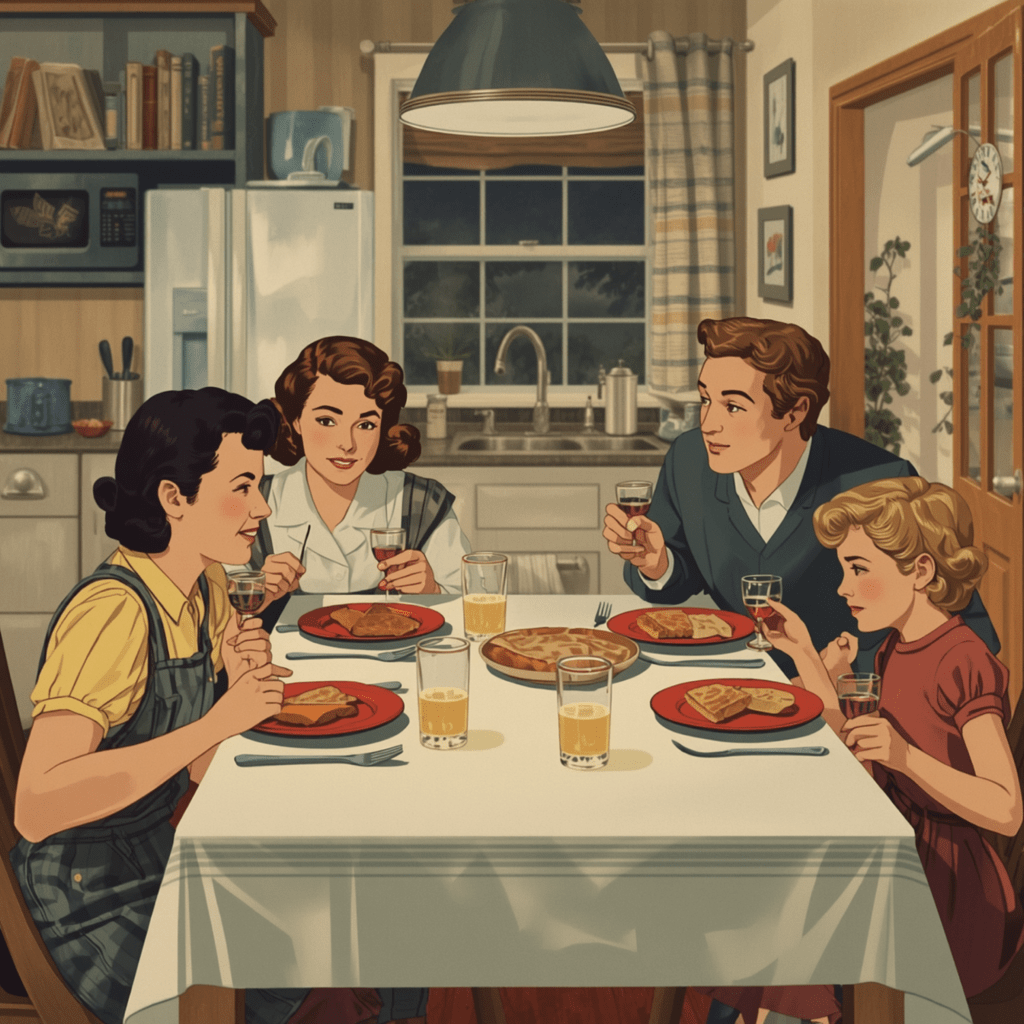
If you’ve ever wandered through a thrift store and spotted a bright orange-red Fiestaware plate, you might have unknowingly come face to face with one of the strangest stories in American dinnerware.
Believe it or not, some vintage Fiestaware plates are technically radioactive.
Before you panic, don’t worry — collectors have been safely displaying these colorful pieces for decades. But the story behind them is one of chemistry, war, and the unexpected ways everyday objects intersect with history.
The Birth of Fiesta
Fiesta dinnerware was introduced in 1936 by the Homer Laughlin China Company. At the time, most American dinnerware was plain white or decorated with delicate patterns. Fiesta was different.
Instead of subtle designs, Fiesta exploded onto the scene with bold, modern colors inspired by the Art Deco movement. Plates, bowls, and pitchers were produced in bright shades like cobalt blue, yellow, turquoise, green, and ivory.
But one color stood out more than any other: a vivid orange-red glaze simply called Red.
The Secret Ingredient
To create that striking color, manufacturers used uranium oxide in the glaze.
In the 1930s, uranium wasn’t considered especially unusual in industrial materials. It had been used in ceramics and glass for years because it produced vibrant colors that were difficult to achieve otherwise.
The uranium oxide gave Fiesta’s red glaze its unmistakable brilliance — a color that collectors still instantly recognize today.
When War Changed Everything
Production of the original red Fiestaware continued until 1943.
That year, the United States government restricted the commercial use of uranium as part of the Manhattan Project, the secret program working to develop the atomic bomb during World War II.
With uranium suddenly classified as a strategic wartime material, Homer Laughlin could no longer use it in their glazes.
Almost overnight, the famous red Fiestaware disappeared from production.
Is It Really Radioactive?
Yes — technically.
Vintage red Fiesta pieces can register on a Geiger counter because the glaze contains uranium. However, the radiation levels are generally considered low enough that collectors safely display the pieces without concern.
Most collectors simply avoid using them for serving acidic foods, which could potentially affect the glaze over time.
For many vintage enthusiasts, the slight radioactivity only adds to the piece’s historical intrigue.
Why Collectors Love It
Original red Fiestaware produced between 1936 and 1943 remains one of the most sought-after pieces in the Fiesta line.
Collectors value it not only for its color but also for its connection to an unusual moment in history — when something as ordinary as a dinner plate was tied, indirectly, to one of the most significant scientific projects of the twentieth century.
It’s a reminder that sometimes the most fascinating stories are hiding in plain sight.
Even on your grandmother’s dinner table.
A Final Thought
Vintage objects carry stories that modern items often lack. A simple ceramic plate can reveal design trends, industrial practices, and even wartime history.
That’s part of what makes collecting vintage so exciting.
You never know what piece of history you might find next on a thrift store s
 The Vintage Vault Co.
Leave a comment