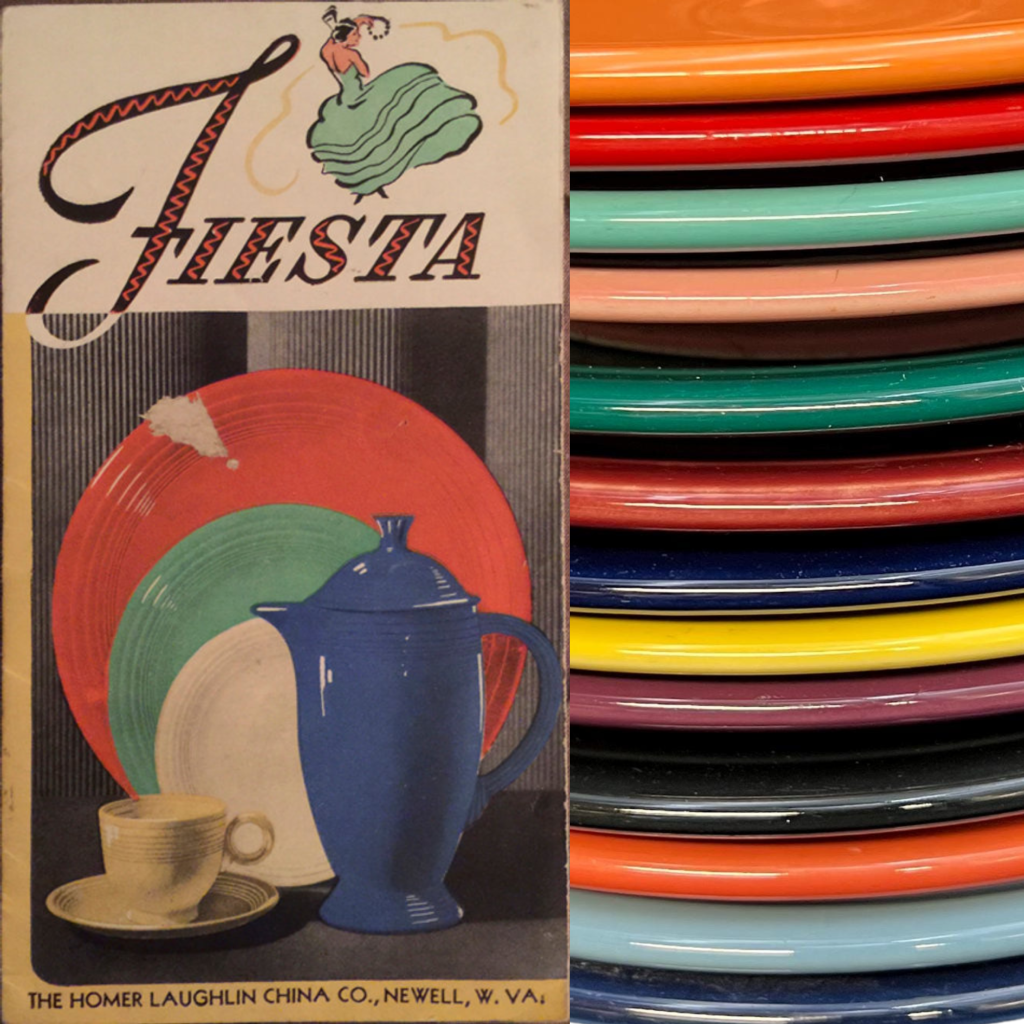
If you’ve ever spotted a brightly colored plate at a thrift store and wondered whether it might be vintage Fiestaware, you’re not alone.
Fiesta has been one of the most popular American dinnerware lines since the 1930s, and because it has been produced for decades, it can sometimes be tricky to tell older pieces from modern ones.
Fortunately, collectors use a few simple clues to identify genuine vintage Fiesta pieces.
Start With the Backstamp
The easiest way to identify Fiestaware is to flip the piece over and look at the bottom.
Different eras used different backstamps.
Early pieces from the late 1930s and early 1940s often include:
GENUINE
FIESTA
HL CO
USA
Later vintage pieces may say:
FIESTA
HLC USA
By the 1960s, some pieces simply say:
HLC
USA
Modern Fiesta, which was reintroduced in 1986, usually says:
FIESTA
MADE IN USA
If you see this marking, the piece is newer rather than vintage.
Look at the Color
Color is another helpful clue.
Original Fiesta colors included:
- Red
- Cobalt Blue
- Light Green
- Yellow
- Ivory
Turquoise was added in 1937 and became one of the most popular shades.
Later colors introduced in the 1950s included chartreuse, rose, gray, and forest green.
Some of these mid-century colors are especially collectible today because they were only produced for a short time.
Check the Shape
Fiestaware has a very recognizable design style.
Classic pieces usually have:
- thick ceramic construction
- concentric rings molded into the surface
- simple rounded shapes
This ringed design became one of the defining features of Fiesta and remains part of the brand today.
Feel the Weight
Vintage Fiesta pieces are usually heavier than many modern dishes.
Because they were made from durable restaurant-grade ceramic, they tend to feel solid and substantial in your hands.
If a piece feels unusually light, it may not be authentic Fiesta.
Watch for Chips and Glaze Wear
Condition matters when it comes to collectible dinnerware.
Before buying a piece, check carefully for:
- chips
- cracks
- heavy utensil marks
- glaze damage
Minor wear is normal for older dishes, but significant damage can affect both the value and the durability of the piece.
Why People Love Collecting Fiesta
Part of the fun of collecting Fiesta is the color.
Many collectors enjoy mixing and matching shades from different decades to create vibrant place settings that feel both nostalgic and modern.
Others focus on hunting down rare colors or unusual pieces like pitchers, casserole dishes, and covered bowls.
Either way, Fiesta collecting has remained popular for nearly a century.
The Thrill of the Find
One of the best things about vintage Fiesta is that it still shows up in thrift stores, flea markets, and estate sales across the country.
With a little practice, you can quickly learn to recognize the shapes, colors, and backstamps that signal you’ve found a genuine piece.
And once you start noticing them, you’ll probably start seeing Fiesta everywhere.
That’s usually when the collecting bug begins.
 The Vintage Vault Co.
Leave a comment